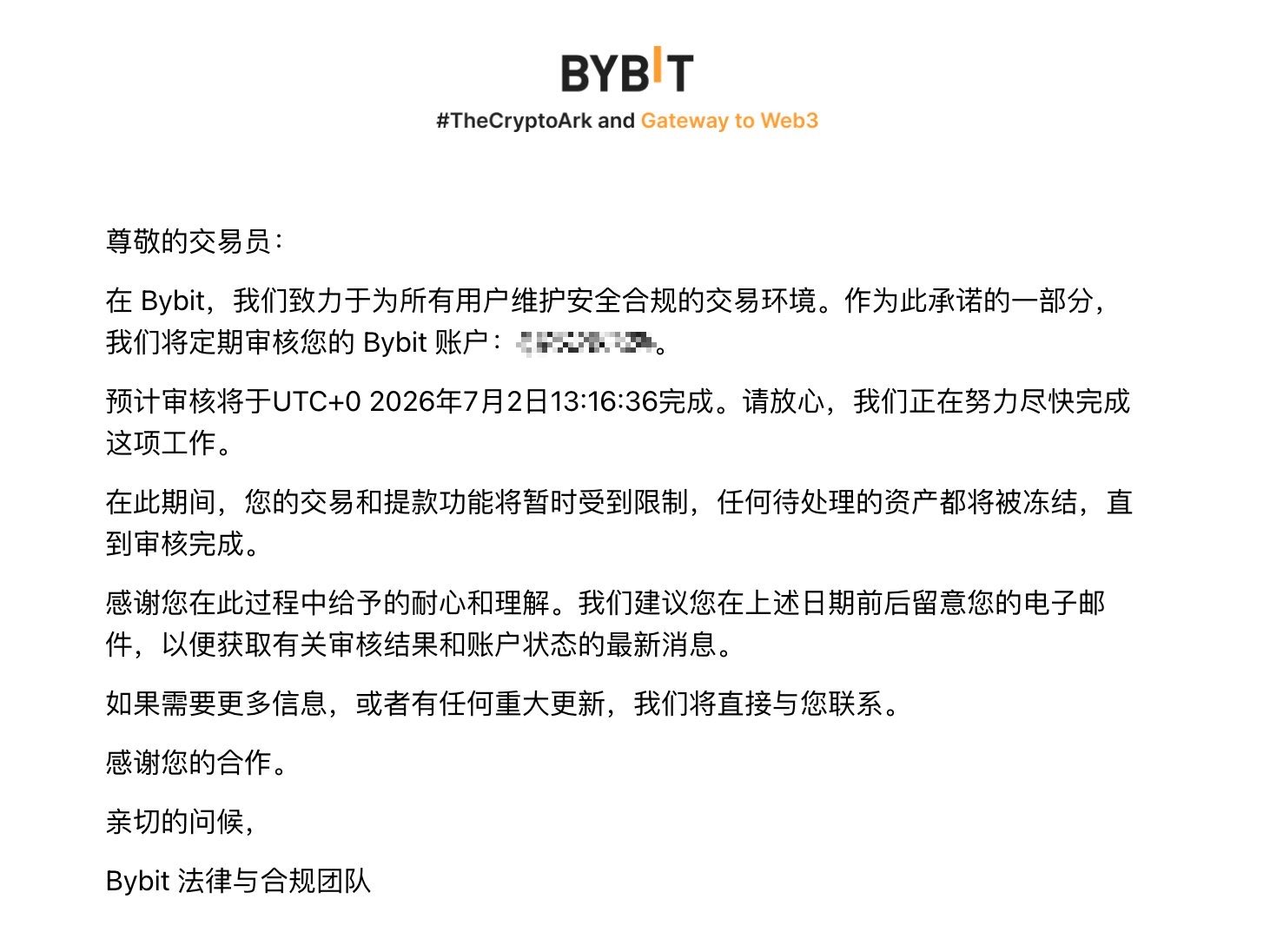
Yesterday I saw a tweet about the "Kill the Wolf" being flagged by Bybit's risk control.
I specifically asked Wolf's CEO why Bybit's risk control takes about 30 days.
There are basically two reasons.
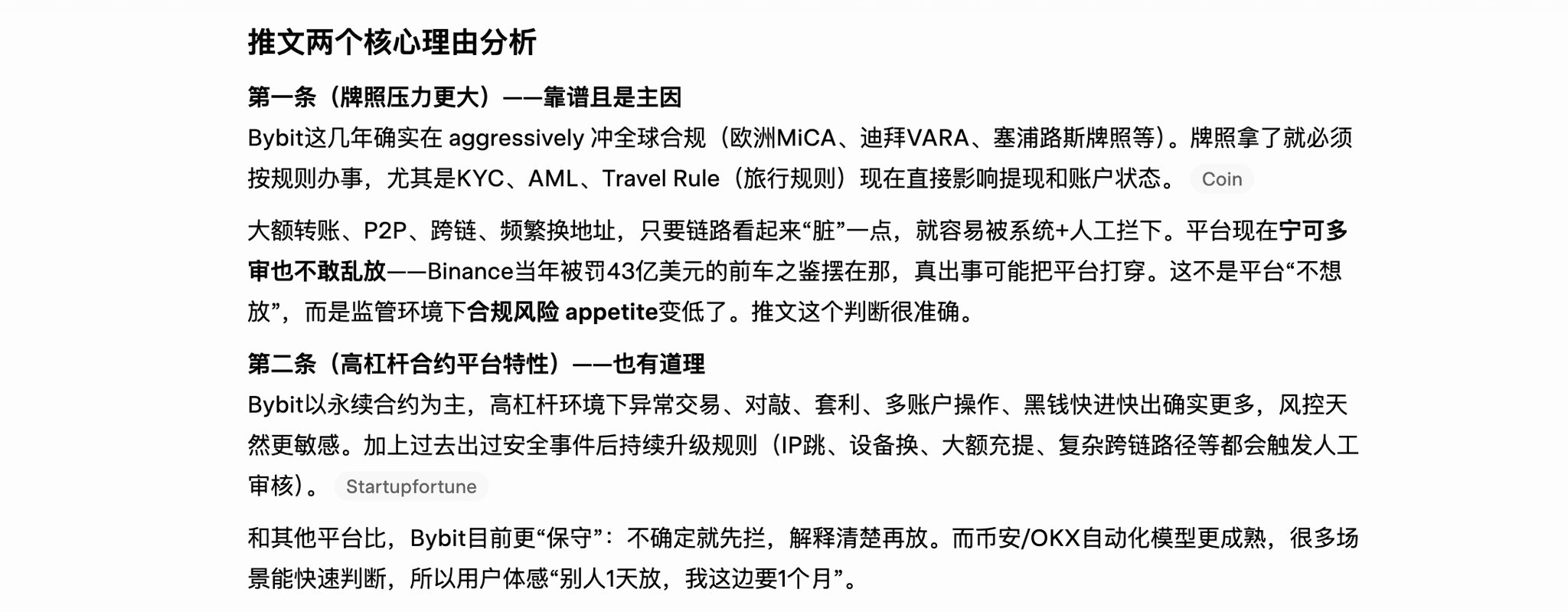
First, Bybit is under greater licensing pressure now.
In recent years Bybit has been pushing for global compliance; European MiCA, Dubai VARA, etc., are not just for announcements.
Once the licenses are obtained, you have to operate according to the rules.
KYC, AML, Travel Rule—things that previously seemed far away now directly affect withdrawals and risk control.
Especially large transfers, P2P, cross‑chain, frequent address changes—if the transaction path looks unclean, it can be blocked easily.
It's not that the platform doesn't want to release funds; it just dares not do it recklessly.
After Binance was fined $4.3 billion, every exchange learned that compliance is not just lip‑service.
When something goes wrong, it can tear the platform apart.
Therefore, Bybit now prefers more thorough reviews rather than risk a faster release.
Second, Bybit is fundamentally a high‑leverage derivatives platform.
Derivatives platforms differ from spot platforms.
Under high leverage, abnormal trades, wash‑trading, arbitrage, multi‑account activity, and rapid inflow/outflow of illicit funds are more common.
Thus its risk control is naturally more sensitive.
A sudden IP jump, device change, large deposit/withdrawal, a more complex cross‑chain path, or P2P receiving suspicious funds can all trigger manual review.
Combined with past security incidents, the platform certainly upgrades its defenses.
Withdrawals, loans, accounts, addresses, fund flows—all get new rules.
User perception is:
It used to be withdrawable, now it isn’t?
Binance and OKX allow it, why doesn’t Bybit?
The answer is simply different standards.
Binance and OKX are also strict, but their automation models are more mature, allowing many scenarios to be judged automatically.
Bybit is now more conservative.
If uncertain, it blocks first, then releases after clear explanation.
Fast releases on Binance or OKX don’t necessarily mean they are safer; slow releases on Bybit don’t necessarily indicate a problem.
Ultimately, it comes down to how much compliance risk a platform is willing to bear.
Bybit is now using a more cumbersome approach to achieve long‑term compliance.
Short‑term users may be annoyed,
but for an exchange that truly wants to survive long term, this could be its moat.
 SmartMoneyCrypto OnChain_Analyst Trader C11.73K @SmartMoneyCrpto
 Titan of Crypto TA_Analyst Trader B139.41K @Washigorira
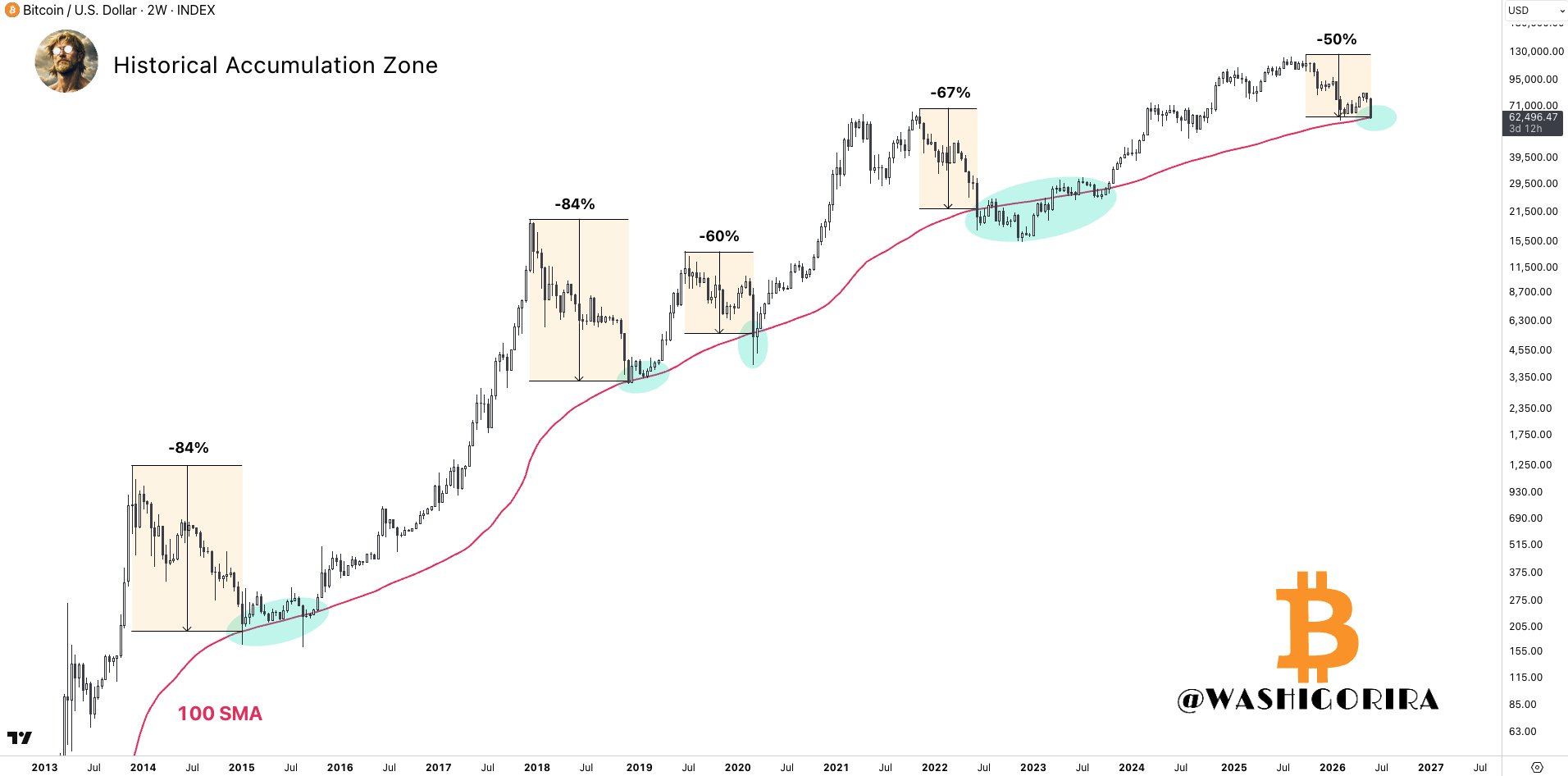 286 21 10.50K オリジナル >リリース後のBTCのトレンド強気










 ZEC#1 Sudden surge in KOL attention+75
 PROVE#2 Social mentions surged-
 WIF#3 Social mentions surged-
 ZBT#4 Social mentions surged-
 JCT#5 Social mentions surged-