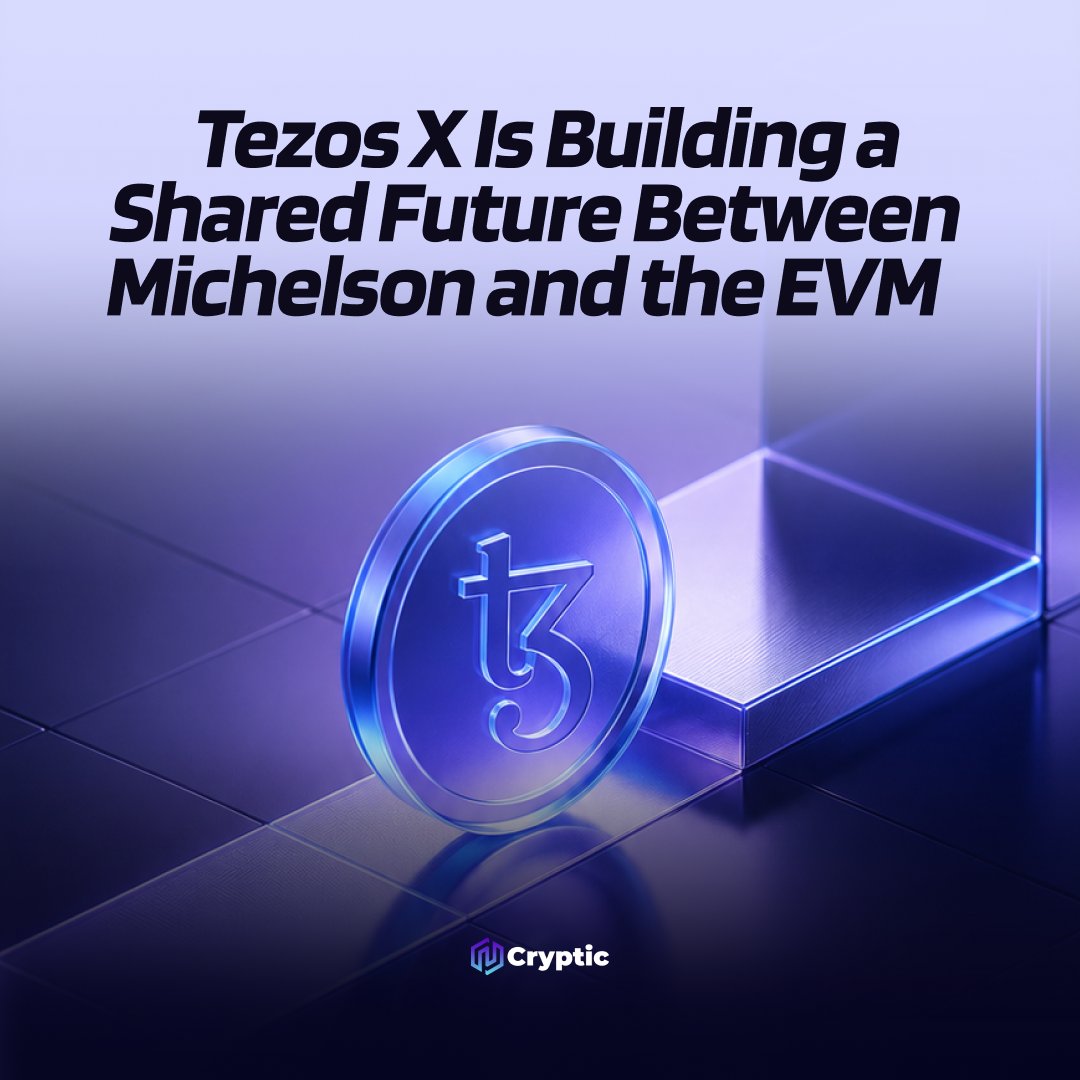
🔐 Tezos launches TzEL: the first post-quantum privacy experimental rollup
@tezos presented TzEL, an experimental privacy rollup deployed on its testnet that uses zk‑STARK proofs and post‑quantum cryptography.
It is one of the first projects to design private transactions prepared to resist future quantum computing attacks.
🔗 What is TzEL and how does it work?
TzEL addresses the problem known as “harvest now, decrypt later”: encrypted data stored today could be decrypted in the future when quantum computers mature.
The system allows users to shield tez within the rollup, transfer them privately between participants, and unshield them back to the base layer.
It also incorporates encrypted memos, view keys, detection keys, and delegated proving to enable selective disclosure: transactions are private by default, but the user can reveal specific information when necessary.
📊 Highlighted technical aspects
TzEL combines zk‑STARK proofs with post‑quantum cryptography, moving away from traditional elliptic‑curve based cryptography.
Each proof can reach up to 300 KB, a size that would be costly on many base layers. Tezos solves this by using its Data Availability Layer (DAL) and rollup architecture, optimized to handle large volumes of information.
The project already has a functional stack, wallets, bridge flows, and developer tools within the testnet.
🔍 In summary
Tezos launched TzEL, an experimental rollup designed to provide privacy resistant to future quantum computers.
By combining zk‑STARK, post‑quantum cryptography and Tezos' native infrastructure, the project represents a significant step toward long‑term secure private transactions within the Web3 ecosystem.
⚠️ Important notice:
This information is based on Tezos' official announcement. It does not constitute investment advice. Always perform your own analysis before making any decision.