🧵 Stellar has joined the UNDP Blockchain Advisory Group as a founding participant.
Most people will see another blockchain initiative.
The more important story is different.
The United Nations is increasingly exploring blockchain as public infrastructure.
And @StellarOrg is already building for that world.
Most people still think of Stellar as a payments network.
But the organizations shaping the future of digital public infrastructure appear to be looking at something much bigger.
A growing number of UN agencies are exploring how blockchain infrastructure can improve financial inclusion, humanitarian aid distribution and public service delivery.
And Stellar keeps appearing in that conversation.
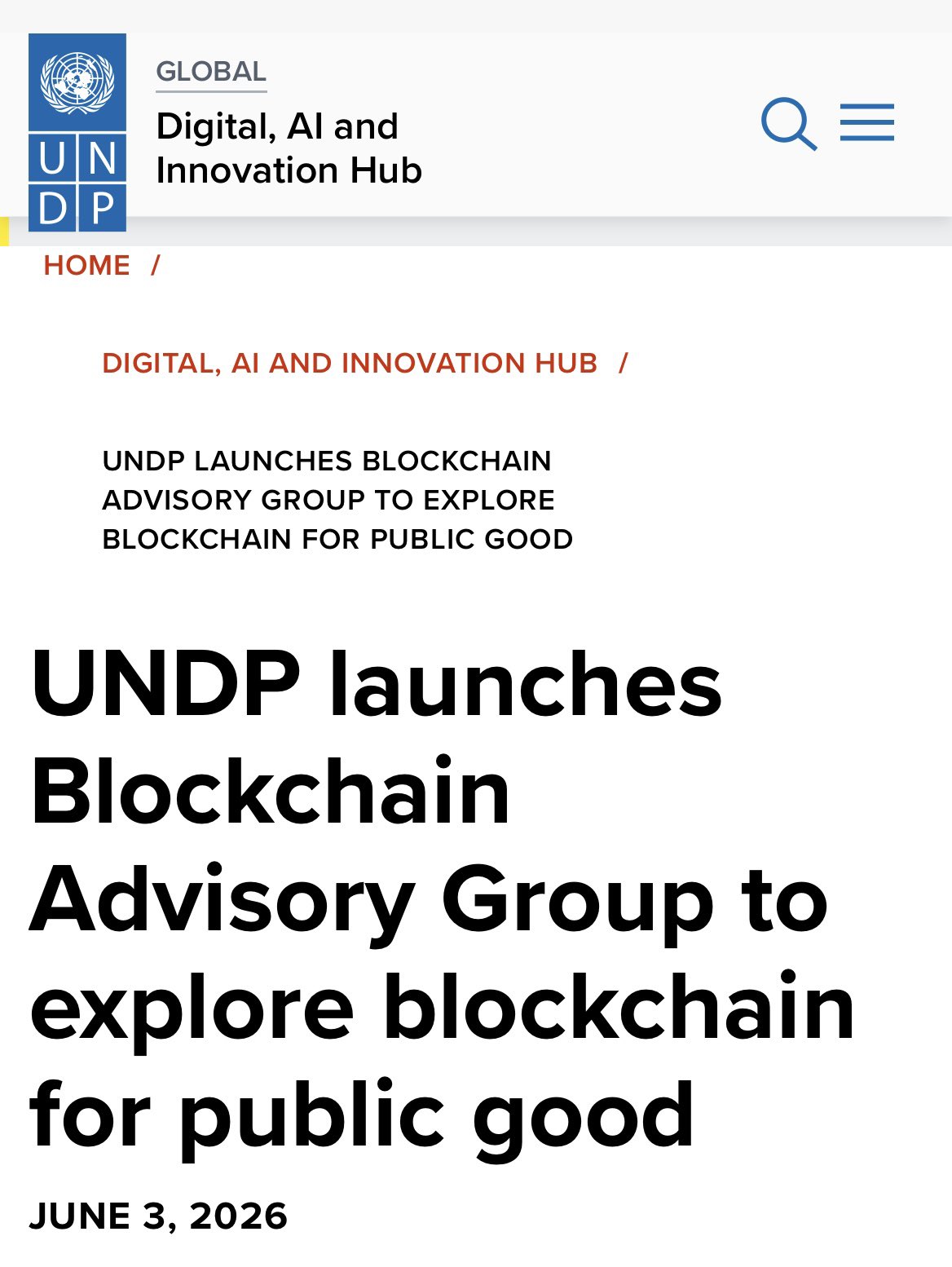
The United Nations Development Programme recently launched its Blockchain Advisory Group, bringing together leading organizations from across the blockchain ecosystem.
The Stellar Development Foundation is one of the founding participants.
That is not a coincidence.
UNDP and Stellar have already established a strategic partnership focused on advancing blockchain solutions for financial inclusion and sustainable development.
In 2025, the Stellar Development Foundation became a core partner of the UNDP SDG Blockchain Accelerator.
The goal is simple.
Help developers around the world build blockchain applications that support the United Nations Sustainable Development Goals.
This is not about speculation.
It is about solving real‑world problems.
The partnership is already moving beyond theory.
In early 2026, UNDP conducted field testing using the Stellar Disbursement Platform in Haiti.
Even during a complete local mobile network outage, aid payments were successfully distributed using Stellar wallets and satellite internet connectivity.
Funds reached recipients within seconds.
The reported success rate was 100%.
That is the type of resilience humanitarian organizations need when operating in crisis environments.
Stellar is not the only UN relationship worth watching.
UNICEF has also been expanding its involvement with digital assets and blockchain‑based financial infrastructure.
In 2026, UNICEF announced support for regulated stablecoins as part of its humanitarian funding initiatives.
The organization is also participating in broader discussions around modern aid‑payment infrastructure alongside institutions such as Visa, Mastercard and leading blockchain organizations.
The foundation for much of this work can already be seen through the UNHCR.
Through Stellar Aid Assist, refugees have received financial assistance directly through digital wallets powered by Stellar infrastructure.
Recipients can receive USDC on their phones and convert those funds into local cash through the global MoneyGram network.
No traditional bank account required.
Think about what that means.
Aid can move across borders instantly.
Funds can be tracked transparently.
Recipients maintain direct access to their money.
And assistance can reach people even when traditional financial infrastructure is unavailable.
This is where blockchain begins to matter.
Not because of trading.
Not because of speculation.
But because infrastructure determines whether people can access financial services when they need them most.
The bigger picture is becoming increasingly clear.
@MoneyGram
@circle
@UNDP
@UNICEF
@Refugees
@Visa
@Mastercard
Each organization is approaching the problem from a different angle.
But many of the underlying infrastructure layers are beginning to converge.
And Stellar continues to sit at the center of many of those conversations.
Infrastructure.
Financial inclusion.
Humanitarian payments.
Real‑world utility.
The next chapter of blockchain adoption may not be written on trading screens.
It may be written in the systems that help move money, deliver aid and expand financial access for millions of people.
And Stellar is already helping build that infrastructure.
🔚