With the fewest words, get the most complete answer, @dappOS_com's @xBubble_ai
Recently, Binance Alpha projects have been growing, so I casually asked the AI a very simple question:
"Are there any worthwhile projects on Binance Alpha?"
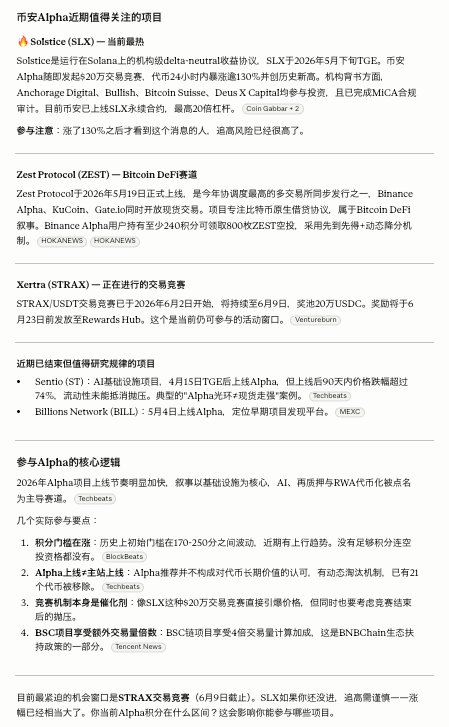
In the past, most AIs would first lay out the information for me: which projects are hot, which have just launched, which have airdrops, which are rising sharply.
That information is certainly useful, but fundamentally it's still answering:
"What is happening now?"
The real hassle is the next step: which projects are worth continuing to watch, which are just short‑term sentiment, and where to start verification—these usually still require the user to reorganize.
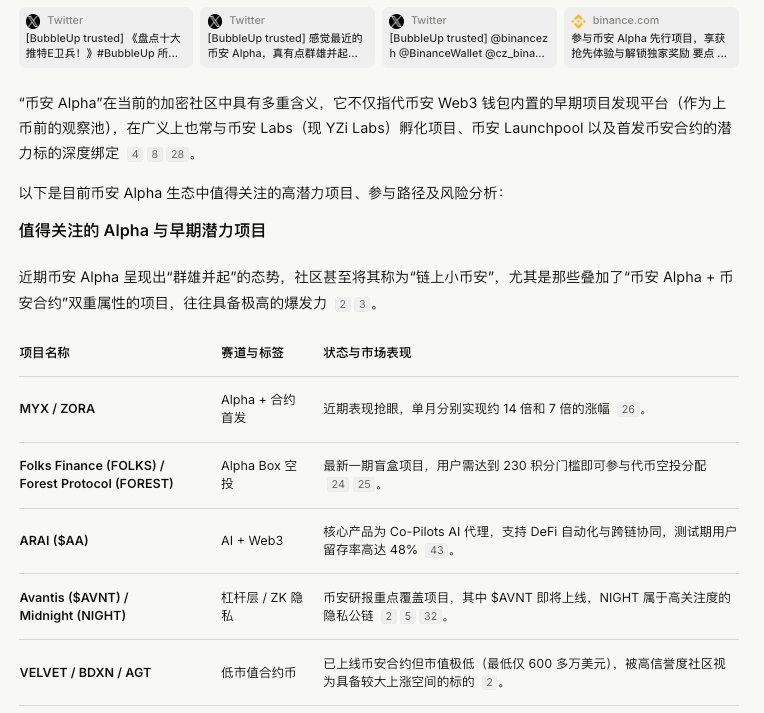
Later I tossed the same question to xBubble. It didn't stop at "list a few projects"; instead it automatically matched a Crypto Research SOP, and the output looked roughly like this:
It first provided a judgment framework: within the current Alpha ecosystem, projects that combine the dual heat of "Binance Alpha + Binance Futures" tend to have greater overall elasticity. It then unfolded specific projects and pathways following that framework.
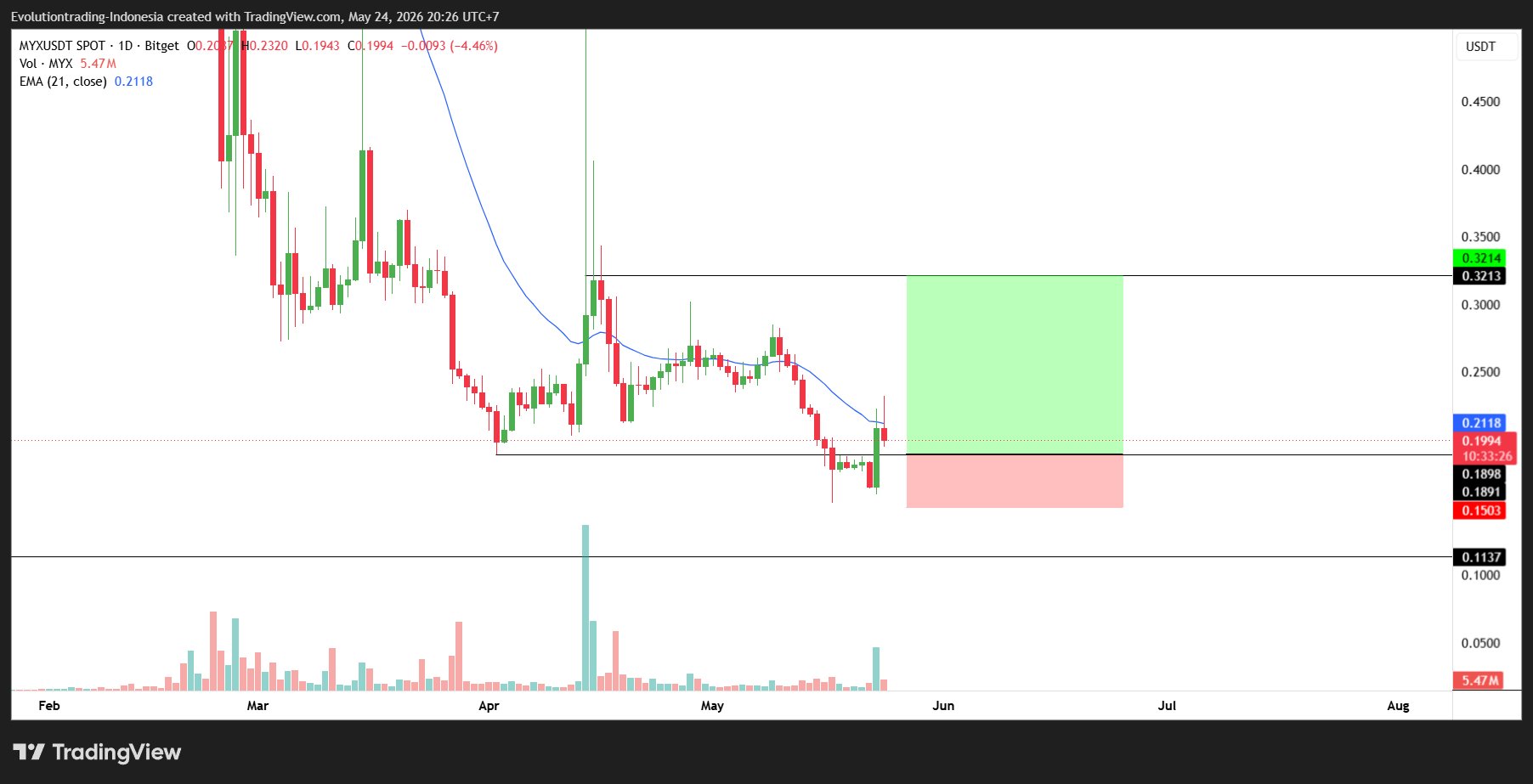
For example, it mentioned projects like MYX and ZORA; after Alpha’s added contract heat, their short‑term performance can be exaggerated—one approaching 14×, the other around 7×.
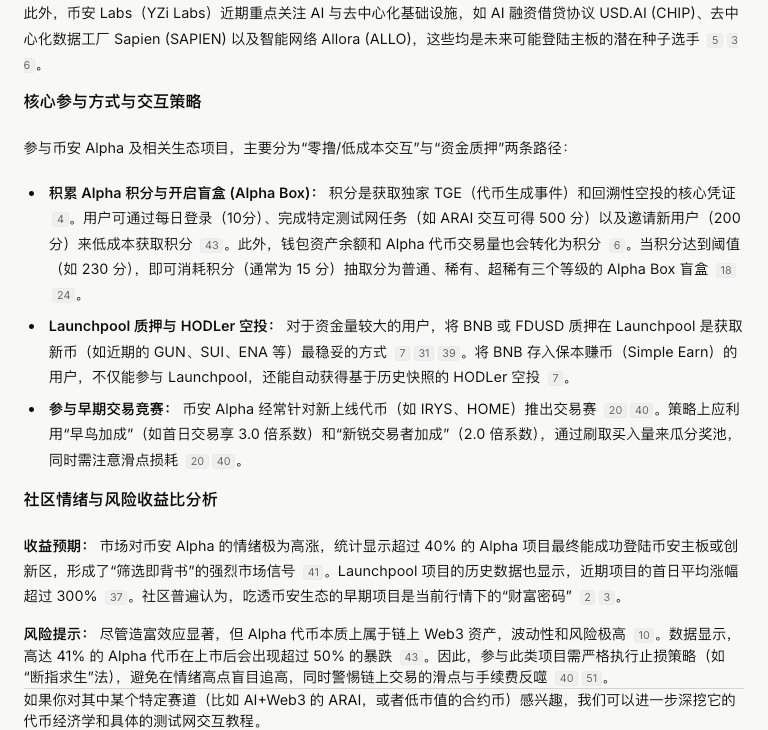
Going further, it didn't stop at "which projects to look at"; it also completed the participation methods.
For smaller capital, it leans toward a points route: daily logins, completing test‑net tasks, slowly accumulating 230 points to draw an Alpha Box.
For larger capital, the route is to stake BNB directly into the Launchpool and receive new token distributions.
The two paths differ quite a bit, but it presents them within the same judgment framework rather than listing them separately.
It also added some risk information. For example, historical data shows that about 40% of tokens launched on Alpha experience a pullback of over 50% in the short term.
This data isn’t necessarily new, but placed within the overall structure it makes the question of "whether to participate" more complete.
I realized this might be what sets it apart from many AI tools. Often users don’t know how to phrase a question, let alone which tool to invoke or which research process to follow.
What xBubble does is, when a user provides only a simple prompt with a goal, it fills in the missing middle path for the user.
Using an SOP system to guarantee that low‑threshold input yields high‑quality output is quite meaningful.
Ordinary people shouldn’t be blocked from AI productivity by ever‑rising learning costs. Lowering this barrier isn’t just a matter of stronger models; AI itself must learn how to use AI.