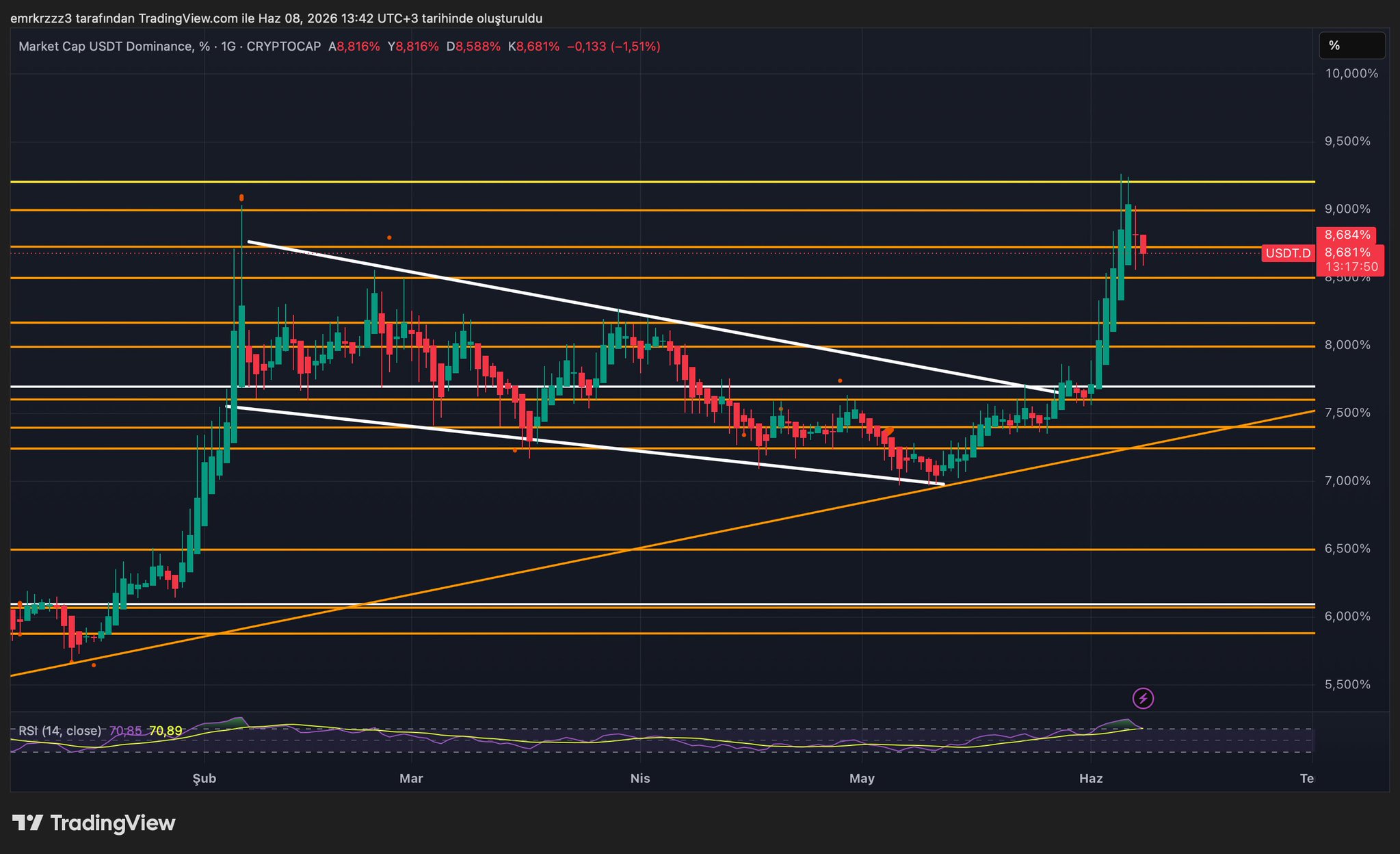
$USDT.D if it manages to stay under 8.50%, there will be a short‑term nice money inflow to the market. https://t.co/yWmOV0S7sl


 6.6K @emkfinans
 $USDT.D if it manages to stay under 8.50%, there will be a short‑term nice money inflow to the market. https://t.co/yWmOV0S7sl
 14
14
 1
1
 183
183
 28.6K @0xBitalk
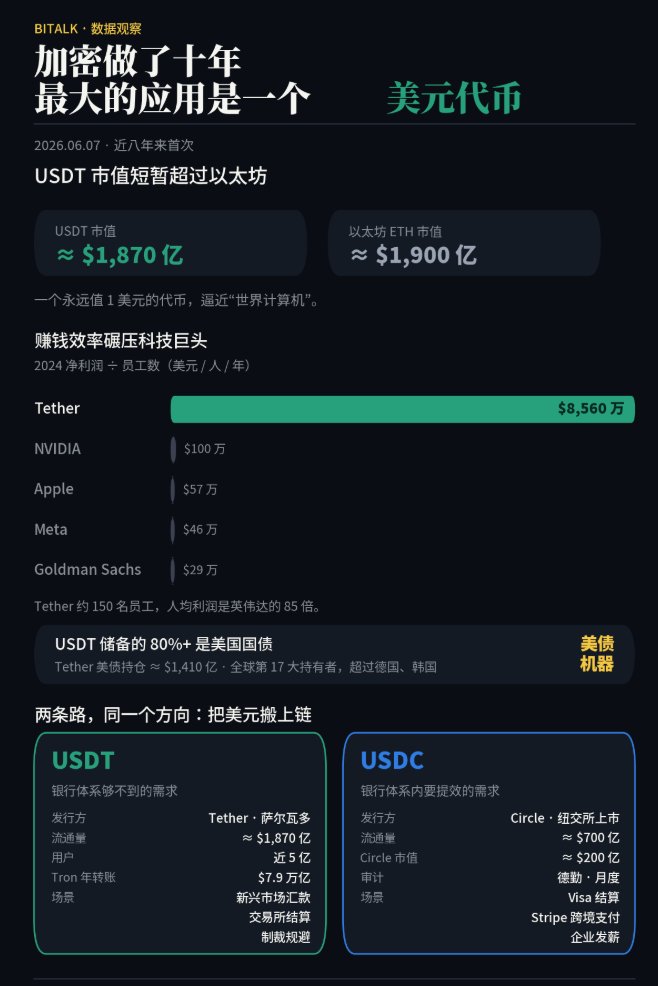
 USDT market cap yesterday for the first time surpassed Ethereum.
Cryptocurrency has been around for years, but truly successful on‑chain applications are few, stablecoins are one of them.
USDT serves demands that the banking system cannot meet:
With nearly 500 million users, a single Tron chain alone will process $7.9 trillion of transfers in 2025; people in Turkey, Argentina, Nigeria use it to hedge local inflation and foreign‑exchange controls; in 2025, sanction‑related entities will move $104 billion via crypto, a year‑over‑year increase of 694%, of which 84% goes through stablecoins.
Circle is regulated in the U.S. by the GENIUS Act, holds a MiCA license in the EU, and undergoes monthly audits by Deloitte, catering to banks' internal efficiency needs. Visa settles card transactions on Solana, Stripe settles USDC in more than 70 countries, and Deel and Rippling use it for payroll. USDC circulates about $70 billion.
Stablecoins essentially put the US dollar on chain; fundamentally they are US‑treasury machines.
More than 80% of USDT’s reserves are U.S. Treasury bonds; Tether’s Treasury exposure will reach $1.41 trillion by the end of 2025, making it the world’s 17th largest holder, surpassing Germany and South Korea; USDC’s reserves are similarly cash and short‑term Treasuries. All interest goes to the issuers, and token holders receive nothing.
How profitable is this business? Tether posted a net profit of $13 billion in 2024, with about 200 employees, yielding roughly $85.6 million profit per employee – 85 times that of NVIDIA; in 2023 its $6.2 billion profit already exceeded that of the world’s largest asset manager BlackRock, which employs 16,500 people.
Circle, a company that essentially only issues stablecoins, is slated to list on the NYSE in 2025, with a current market cap of around $20 billion. Wall Street is willing to price the business of issuing dollar‑backed tokens far above most genuine crypto projects; Duan Yongping recently bought a small position in Circle to test the waters.
Crypto has spent a decade narrating disruption, but the truly globally adopted and most recognized by traditional capital are the two dollar‑pegged tokens backed entirely by U.S. Treasuries.
Who will own the future of crypto narratives? Is it stablecoins that roll traditional finance onto the chain; projects like Hyperliquid that bring trading and speculation on chain; or a return to native crypto projects like Bitcoin?
Or perhaps, at this stage, the narrative has completely shifted – only applications that bring external asset bundles onto the chain have a future. Yet those may eventually flow back to support Bitcoin.
 2
0
162
2
0
162
 2.0K @Wizardy00 2.0K @Wizardy00
 be honest
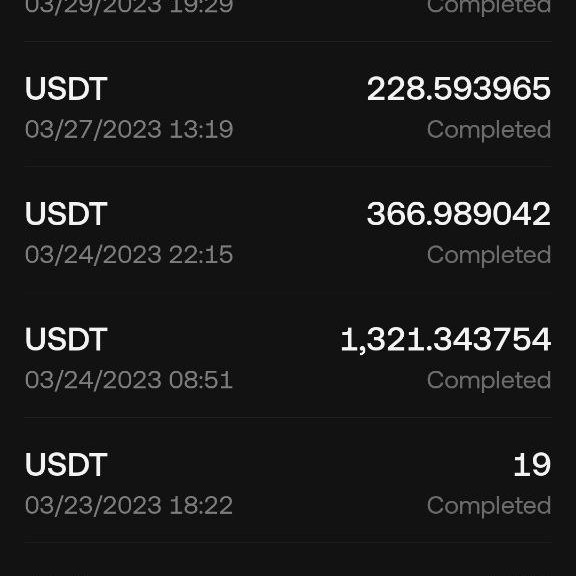
Whats the highest amount you have ever made from a single airdrop?
mine: $2000 https://t.co/xDSlI0br0Z
 11
8
129
11
8
129