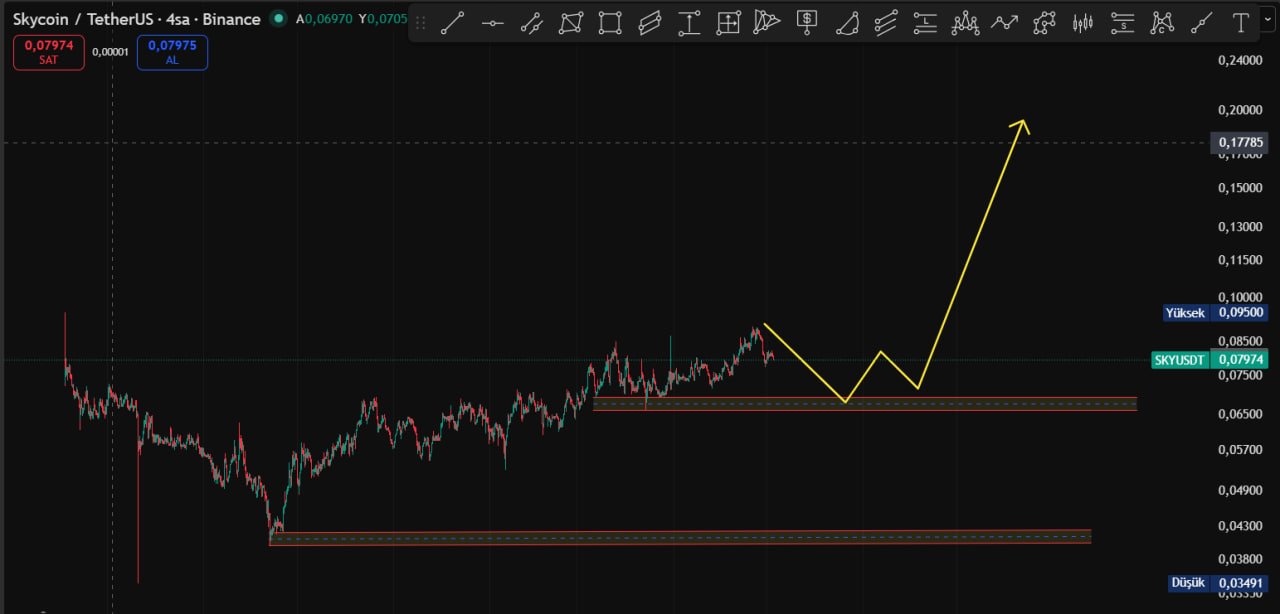
#SKY as expected the pullback came.
0,070 $ was the level I was watching. It fell below support.
I will keep an eye on it for a while longer. https://t.co/BigBuzOHPm


 27.9K @Cyriptoman4
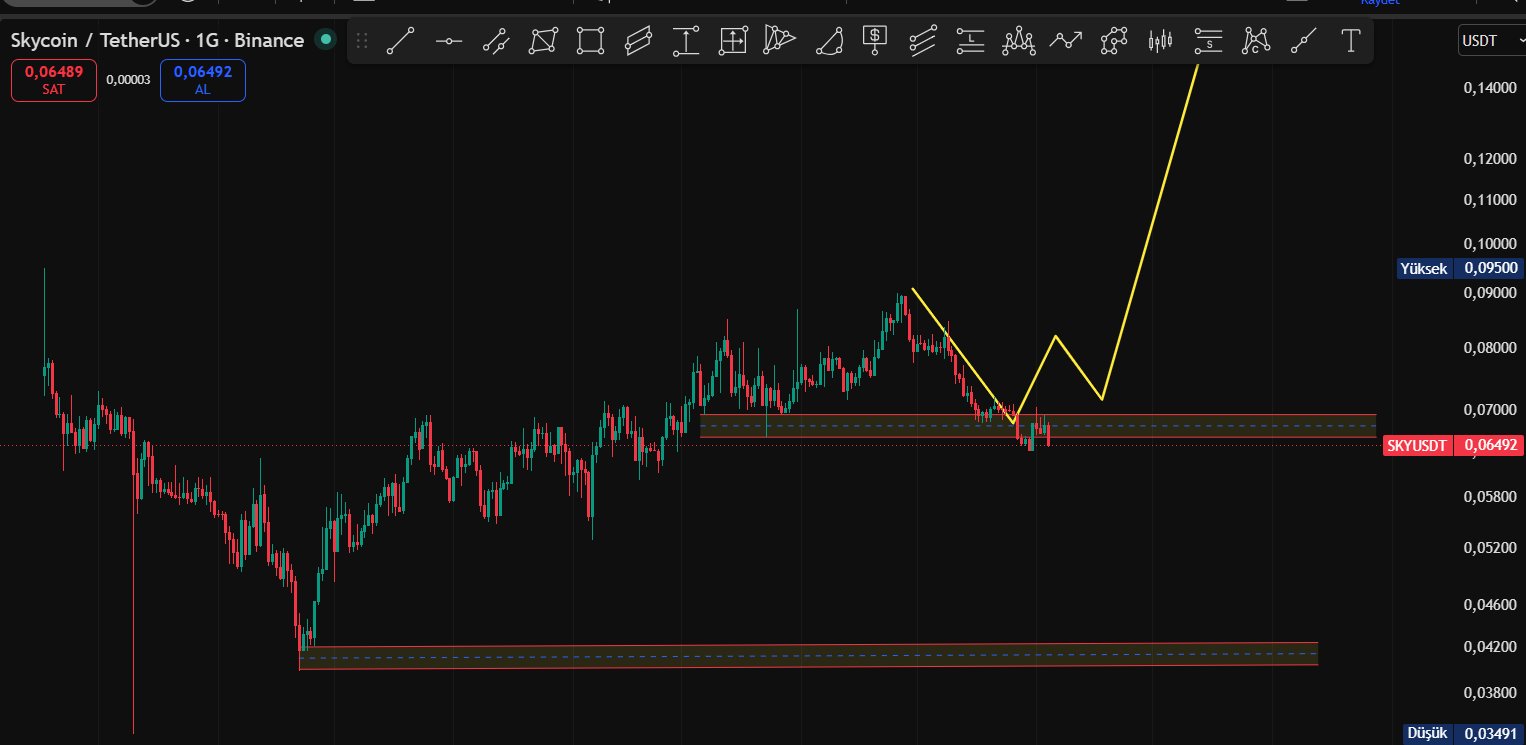
 #SKY as expected the pullback came.
0,070 $ was the level I was watching. It fell below support.
I will keep an eye on it for a while longer. https://t.co/BigBuzOHPm
 48
48
 1
1
 1.1K
1.1K
 61.0K @Slappjakke 61.0K @Slappjakke
 When reviewing a DeFi protocol security should always be in mind.
Moneymarkets are spending millions on audits, and have Risk Teams monitoring and reviewing collateral assets, but do you know who's first in line to absorb losses if funds are actually lost in the protocols you deploy your assets into?
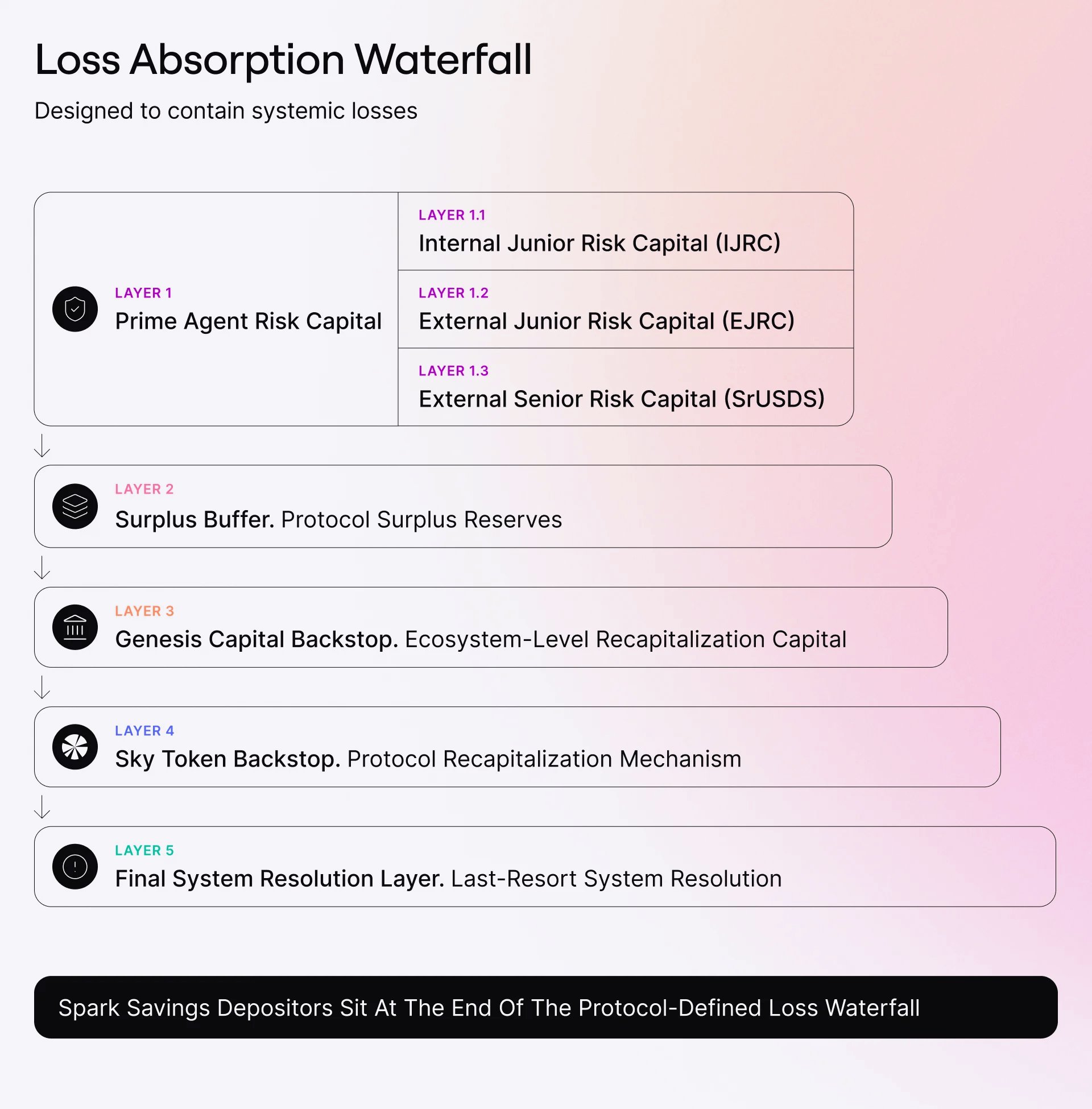
@sparkdotfi SparkLend breaks down the waterfall of loss absorption through 5 layers
Layer 1: Prime Agent Risk Capital
Spark eats its own losses first through internal treasury capital, then pulls in external junior money, and only after that touches the senior layer
Layer 2: Surplus Buffer
Protocol fees and liquidation revenue pile up here as a system-wide shock absorber
Layer 3: Genesis Capital Backstop
New layer (pending governance) where excess capital sitting idle across the Sky ecosystem gets tapped before SKY dilution kicks in
Layer 4: Sky Token Backstop
If everything above is depleted, the protocol mints SKY to recapitalize. Minting SKY is governance-controlled and designed for genuine tail scena
 49
12
1.7K
49
12
1.7K
 46.2K @Eli5defi 46.2K @Eli5defi
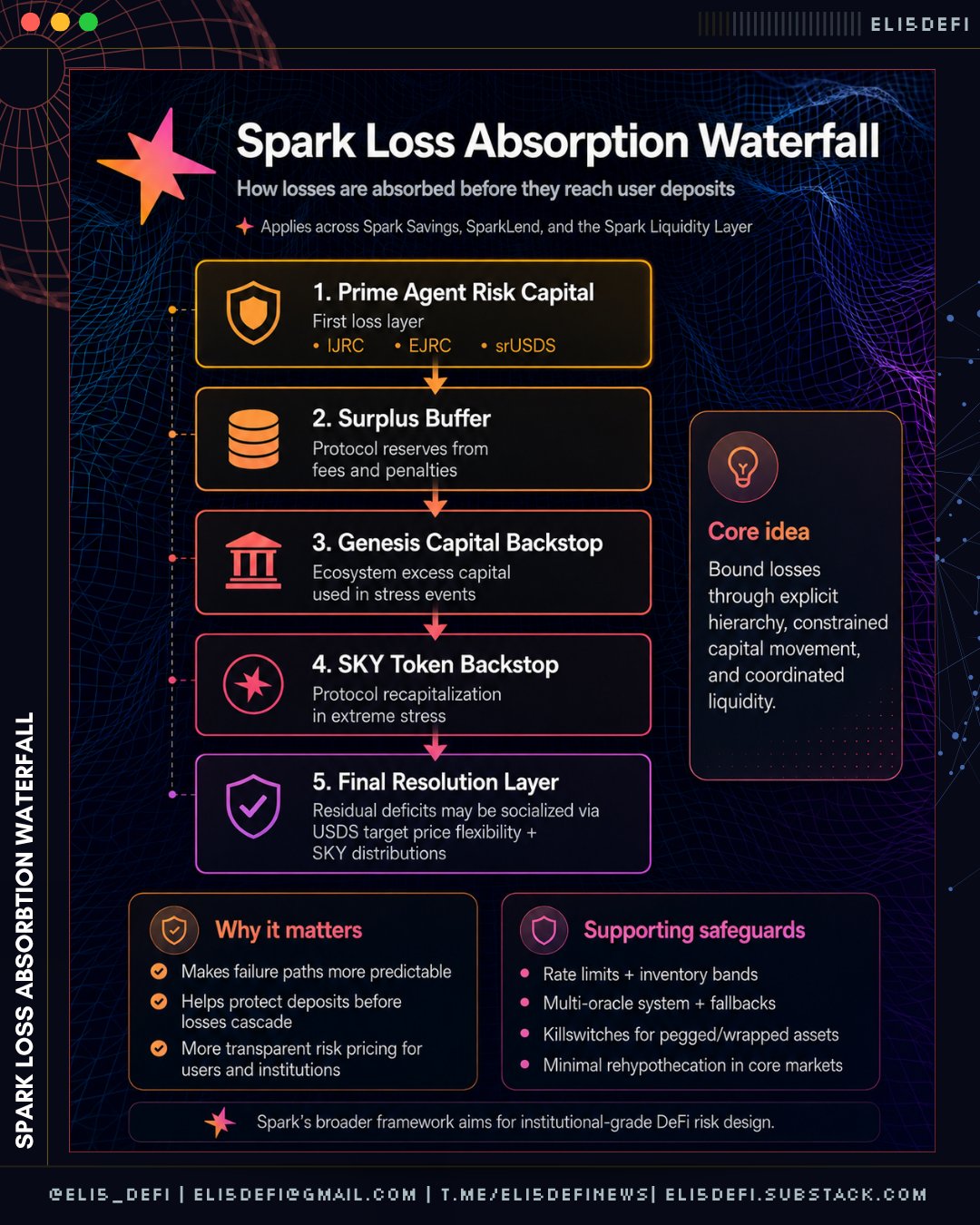
 Spark just published one of the clearer security frameworks in scaled DeFi.
Not through vague “security” claims, but through a proper loss absorption waterfall.
In simple terms:
It explains how losses are absorbed before they reach user deposits across Spark Savings, SparkLend, and the Spark Liquidity Layer.
That matters more after the latest wave of DeFi exploits.
The recent KelpDAO rsETH exploit showed how one weak cross-chain component can spread stress across lending markets, trigger emergency freezes, and turn “isolated risk” into ecosystem-wide liquidity pressure.
This is exactly why explicit risk design matters.
Spark’s core idea is bounded capital movement
→ Explicit loss hierarchy
→ Programmatic liquidity coordination
→ Multi-oracle safeguards
→ Governance-constrained automation.
In plain english:
→ Losses flow in order: prime agent capital, surplus buffer, genesis backstop, sky backstop, then final resolution
→ Only approved collateral; depegs can trigger emergency shutdown via special pri
 38
19
3.0K
38
19
3.0K