$XNT's Leviathan solves crypto privacy and scalability with private smart contracts.
What if the biggest flaw in crypto isn't scalability?
What if it's that every transaction, wallet, balance, and smart contract interaction is still public?
That's the problem $XNT is trying to solve with Leviathan.
Most blockchains force you to choose.
Privacy or programmability. Scalability or security. Speed or decentralization.
$XNT is trying to prove those trade-offs aren't actually necessary.
That's what makes Leviathan interesting.
It's not just another L2 chasing TPS numbers.
It's built around a bigger idea:
What if smart contracts were private by default, scalable, and quantum-resistant from day one?
Most of crypto still struggles with at least one of these problems.
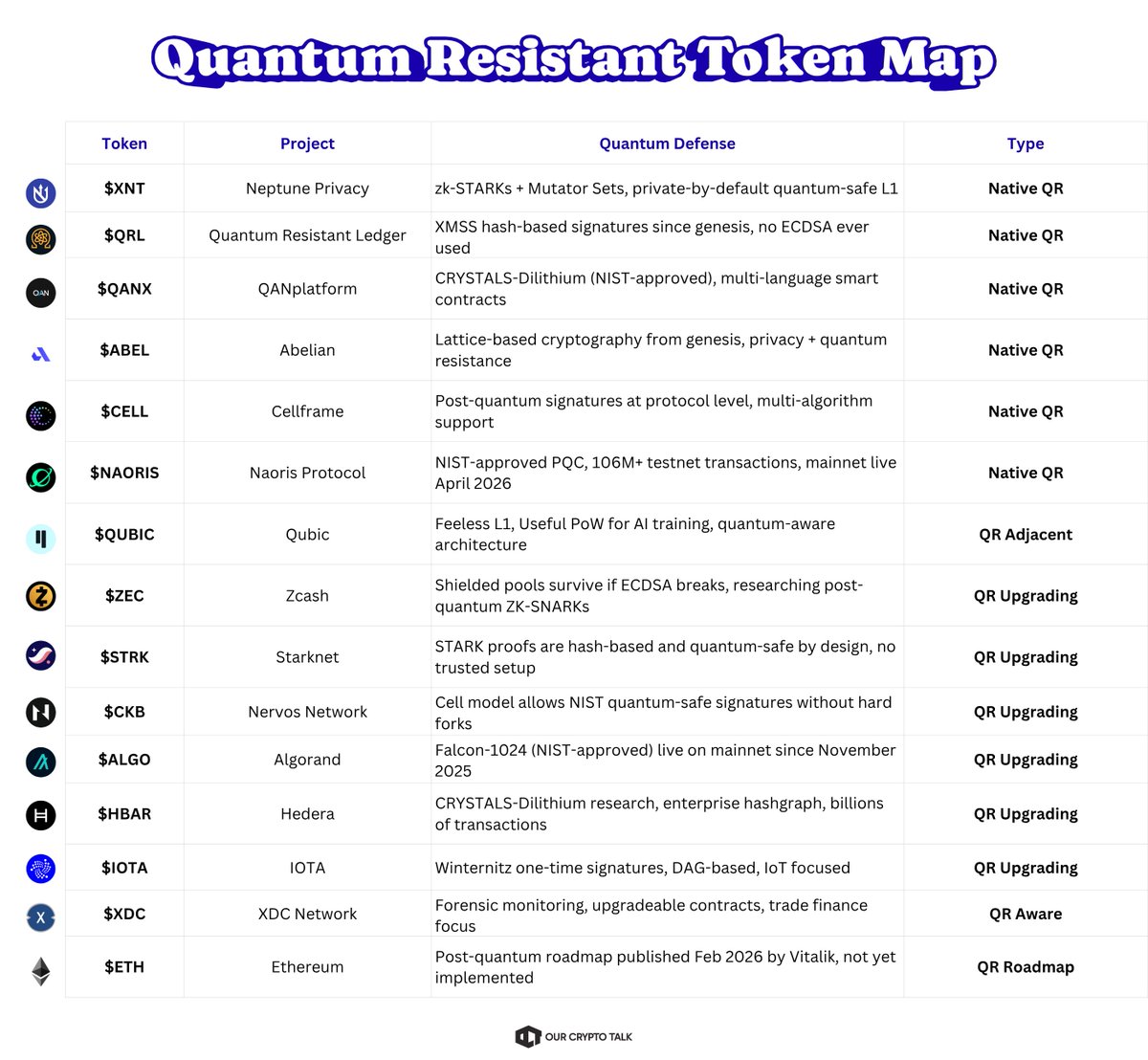
Ethereum and Solana offer programmability and scale, but everything is visible.
Privacy coins offer confidentiality, but lack robust smart contract ecosystems.
Many zk-projects improve privacy, but still inherit public-chain assumptions and future quantum risks.
Leviathan takes a different approach.
Built on Neptune's L1, the stack combines:
• zk-STARKs
• Mutator Sets
• Miden VM
• PoW settlement
All designed to work together from the start.
The zk-STARK angle matters.
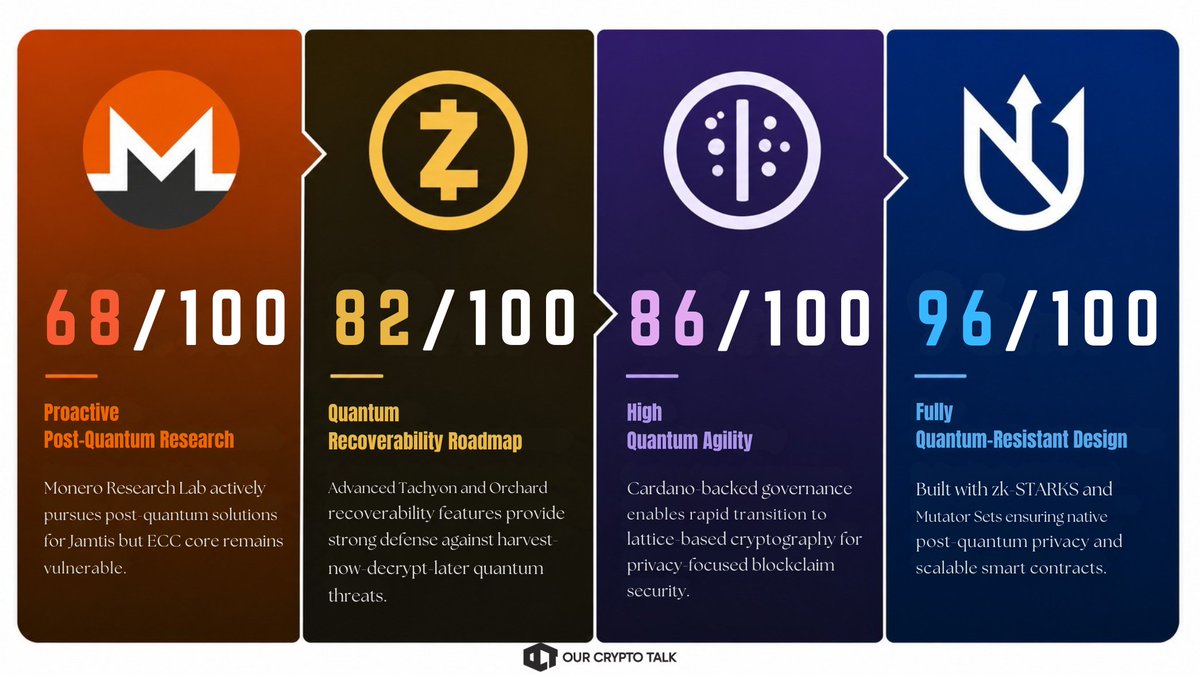
Unlike many systems built around elliptic curve cryptography, STARKs are hash-based and designed with post-quantum security in mind.
No trusted setup.
No toxic waste assumptions.
Privacy and verification built directly into the protocol.
Then there's Mutator Sets.
One of the more interesting pieces of the architecture.
Instead of privacy becoming weaker as the network grows, Mutator Sets allow confidential state updates while keeping proofs efficient and unlinkable.
Privacy without sacrificing scalability. That's a difficult problem most chains still haven't solved.
Leviathan then adds Miden VM on top.
Developers can build:
• Private DEXs
• Confidential lending markets
• Shielded stablecoins
• Private payments
• Hidden-state gaming applications
• AI-agent economies
Without needing to understand the underlying cryptography.
The VM handles the complexity.
Users just interact with applications.
The architecture itself is straightforward:
Neptune L1 handles security and settlement.
Leviathan L2 handles execution.
Fast L2 transactions get aggregated into STARK proofs and settle back to L1.
One ecosystem. One asset.
$XNT across both layers.
No separate L2 token. No fragmented incentives.
The bigger thesis is simple:
Crypto spent the last decade building public financial infrastructure.
What happens when privacy becomes the default instead of the exception?
That's the market Neptune and Leviathan are aiming for.