We might not have seen a ton of crazy new technologies or sectors developed this past cycle, but we have seen a big move towards actual revenue generating companies.
Even the big DeFi protocols from the past few years are still raking in millions a month and have since also implemented some form of fee switch or buyback mechanism.
The 2021 cycle kind of felt like the dot com bubble for DeFi. A lot of hype, no sustainable revenue/value accrual for holders. Coins fell and many have not made it back to that top since.
With most investor unlocks done from protocols that did launch that cycle, I think at some point these can be pretty good long term spot buys. I don't think the likes of $UNI, $AAVE etc are going anywhere. But you might need a lot of patience for these and have a multi-year horizon.
Newer protocols like $ENA, $PUMP and of course $HYPE are interesting but will have more volatile revenue and still have token unlocks ahead, so timing will be more difficult. I think ENA & PUMP will perform incredible during a hot market, but that's the key.
Just some random thoughts. I think many of these big protocols have come down to reasonable levels by now. Obviously DeFi itself has not been hot while $ETH has underperformed this cycle too.
But I don't think the DeFi lull lasts forever.
Uniswap Live Price data
Uniswap UNI Price History USD
Own UNI Now
Buy and sell UNI easily and securely on BitMart.
Uniswap X Insight

 416.2K @DaanCrypto
  12
12
 12
12
 1.3K
1.3K
 1.4M @BitMartExchange
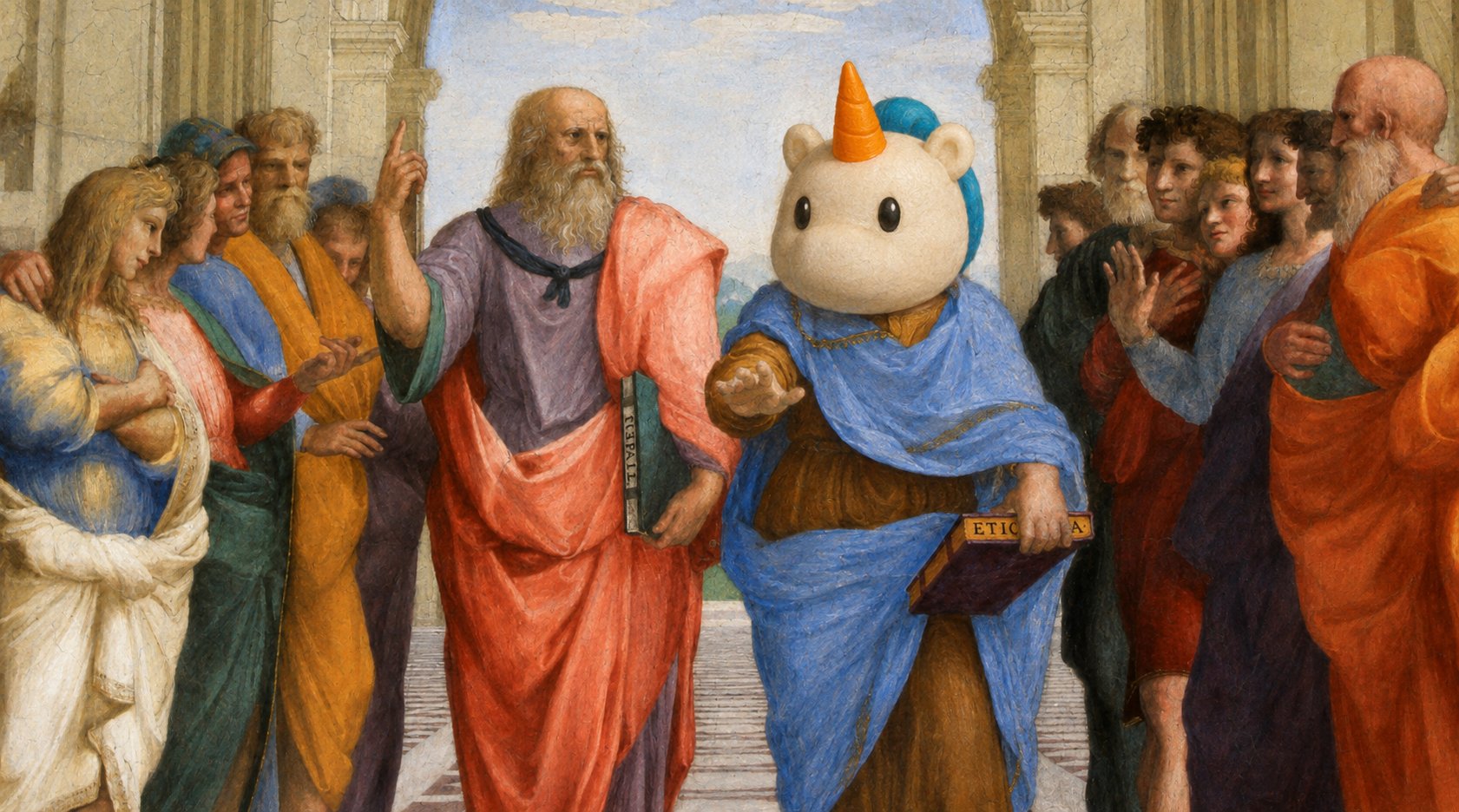
 Socrates said "know yourself."
I know I'm buying the dip. 🏛️ https://t.co/3ONqC4iQ0w
 17
10
1.8K
17
10
1.8K
 29.1K @Mars_DeFi
  52.3K @TheDeFiPlug
 Crypto’s biggest winners are usually obvious.
Just not when they’re still investable.
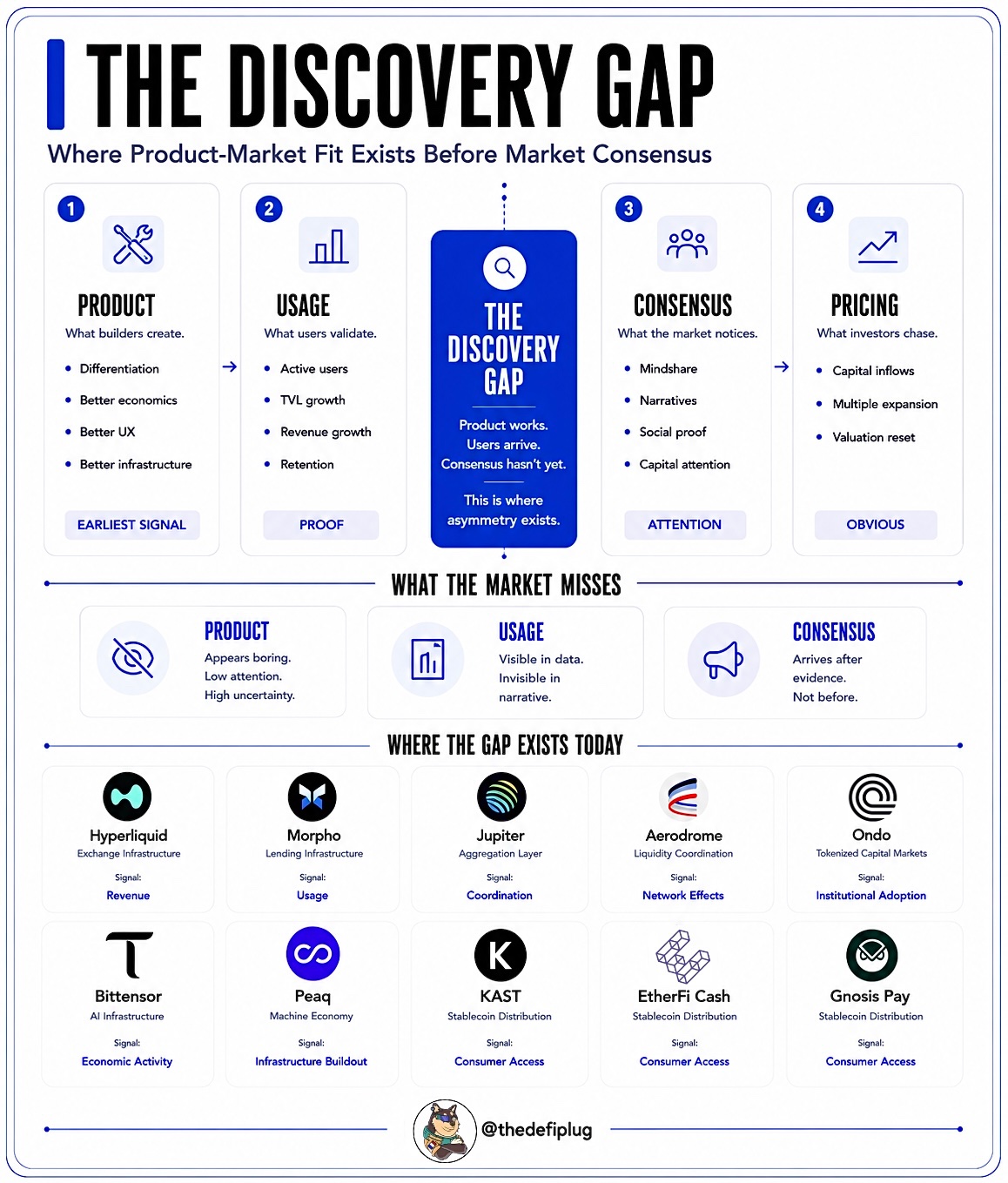
One of the most persistent patterns in crypto is that product precedes narrative, usage precedes attention, and revenue precedes consensus.
Uniswap V2 launched in May 2020. Aave V2 launched in December 2020. Neither became immediate consensus trades. The products existed before the market collectively decided they mattered.
That sequence keeps repeating.
Most investors believe they are searching for innovation. In practice, they are searching for validation.
They want to see:
➢ Growing users
➢ Growing TVL
➢ Growing revenue
➢ Growing mindshare
The problem is that these signals arrive at different times.
Product comes first.
Usage comes second.
Consensus comes last.
By the time everyone agrees something is important, much of the asymmetry has already disappeared. Consensus reduces uncertainty. It also reduces opportunity.
That is why some of the most important infrastructure tends to emerge during corrections rather than euphoric phases.
Bull markets are good for distribution. Corrections are good for construction.
When capital becomes selective, builders focus less on attention and more on product quality, retention, and economics. Historically, those periods have produced many of crypto’s defining protocols.
The current market resembles those environments more than many realize. Attention has narrowed around a handful of large-cap assets while speculation has cooled.
Historically, this is where the next generation of infrastructure starts separating itself.
Not through price.
Through usage.
Every cycle creates a discovery gap. A period where a protocol is already working, but the market has not fully processed what it is becoming.
The signals tend to look familiar:
➢ Real users
➢ Real revenue
➢ Product differentiation
➢ Limited attention
➢ Weak consensus
The market struggles to value these periods because there is little social proof.
Only evidence.
Several protocols are already doing what past winners did before the market noticed.
@HyperliquidX is proving a crypto-native exchange can compete directly with centralized venues while generating meaningful revenue.
@Morpho reflects a broader trend where lending becomes infrastructure rather than a destination application.
@JupiterExchange benefits from ecosystem fragmentation. As liquidity spreads across venues, aggregation becomes more valuable.
@AerodromeFi has become a coordination layer for liquidity on Base rather than simply another DEX.
@OndoFinance sits at the center of tokenized capital markets if RWAs continue expanding beyond Treasury exposure.
@opentensor remains one of the few AI networks with measurable economic activity tied to compute demand.
@peaq is building infrastructure for a world where machines become economic participants.
@KASTxyz, @ether_fi Cash, and @gnosispay point toward another structural trend. Stablecoins are evolving from trading collateral into consumer financial accounts. The opportunity may not be the stablecoin itself. It may be owning the distribution layer through which users access them.
What stands out is not the individual names.
It’s the pattern.
Most of these protocols are not winning because of tokens.
They are winning because they own infrastructure, distribution, coordination, or revenue-generating activity.
The names that define 2027 may ultimately be different.
The underlying pattern probably won’t be.
Every cycle produces protocols that look obvious in hindsight. The difficult part is recognizing them while the discovery gap still exists.
History suggests that some of the protocols that define the next cycle are already live today.
The market simply hasn’t reached consensus yet.
 31
19
3.0K
31
19
3.0K
Price Prediction
When is a good time to buy UNI? Should I buy or sell UNI now?

Beacon Prediction
Probabilistic Price Forecast (Next 24 Hours)This prediction is an experimental technical product and is provided for reference purposes only. It does not constitute investment advice. Unexpected real-world events may significantly impact market behavior. Traders should make decisions with caution.
Explore More
BM Discovery










New Listing