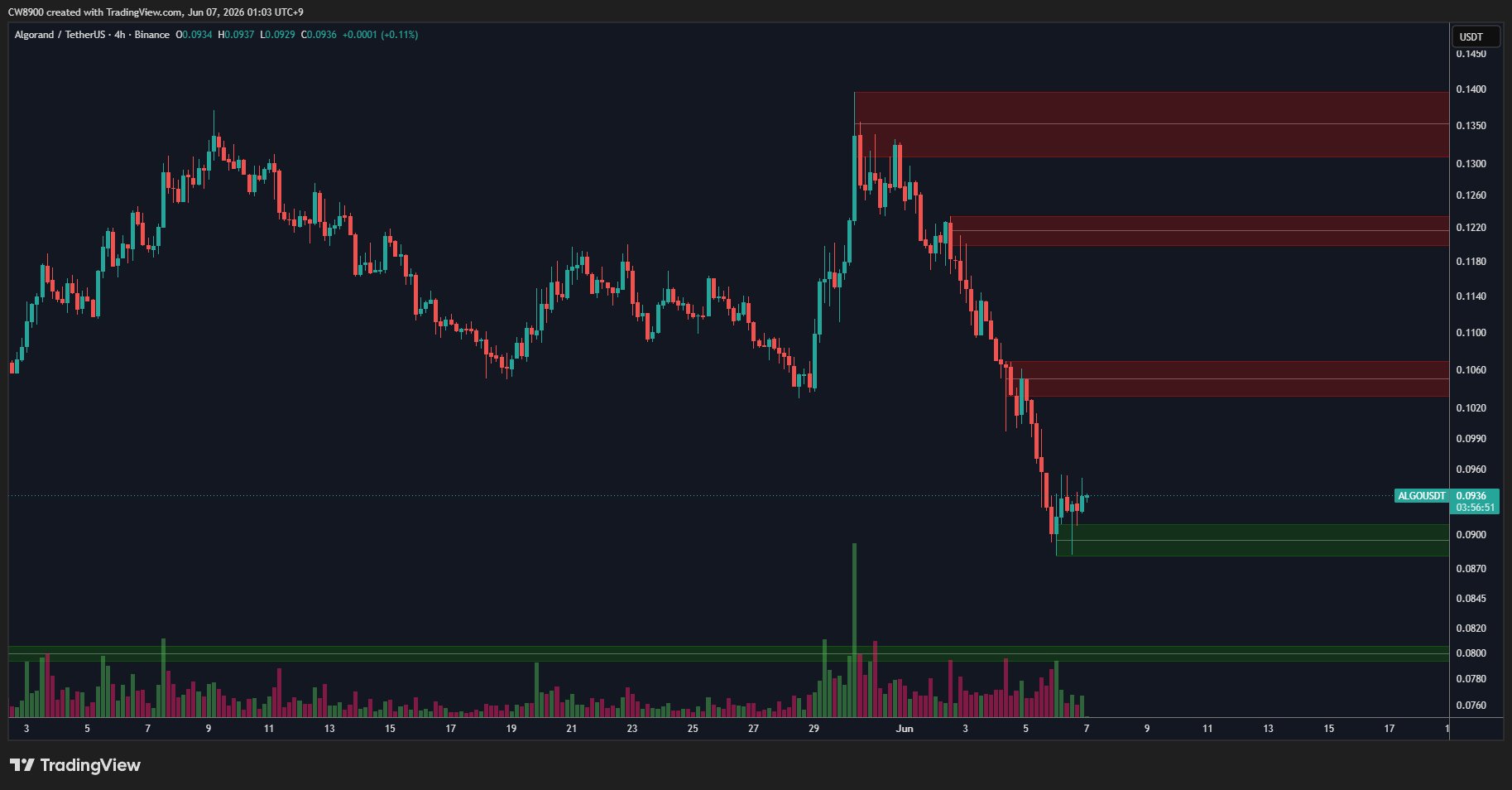
A new buy wall has formed on $ALGO. https://t.co/Gsei4AxBYJ


 22.7K @CW8900
 A new buy wall has formed on $ALGO. https://t.co/Gsei4AxBYJ
 6
6
 0
0
 509
509
 5.2K @algerstmehn
  16.0K @algodevs
 A room packed with builders at @42_berlin kicking off the hackathon with an Intro to Algorand + x402 workshop by the amazing @ganainmtech! 👊🔥 https://t.co/dM1C8VleNr
152
5
2.2K
 2.9K @MarcoSalzmann80
 🧵 Google is building the authorization layer for AI payments.
@Algorand is helping provide the settlement layer.
Together, they point toward a future where software can transact autonomously.
Most discussions about artificial intelligence focus on models, capabilities and automation.
A different question is beginning to emerge.
How will AI systems actually exchange value?
As autonomous software becomes more capable, the ability to transact may become just as important as the ability to process information.
This is where Algorand’s growing role within Google’s Agent Payments Protocol ecosystem deserves attention.
To understand why this matters, it is important to separate authorization from settlement.
Google’s Agent Payments Protocol focuses on trust, permissions and cryptographic mandates.
In simple terms, it helps determine whether an AI agent is authorized to spend money or execute transactions on behalf of a user or organization.
Authorization is essential.
But authorization alone does not move money.
That is where settlement infrastructure becomes necessary.
Algorand provides the blockchain layer through which transactions can be executed, verified and finalized.
The relationship is complementary.
@Google defines how autonomous agents can be trusted to transact.
@Algorand provides the infrastructure through which those transactions can settle.
A second important development is Algorand’s full integration across the x402 stack.
The x402 standard builds upon the long-standing HTTP 402 “Payment Required” concept and introduces native payment functionality directly into internet services.
The implications are significant.
Rather than relying on subscriptions, invoices or centralized billing systems, software applications and AI agents can pay directly for the resources they consume.
A single API request.
A dataset.
Additional computing power.
A premium service.
Each interaction can be priced and settled individually.
One reason this matters is simple economics.
Traditional payment rails were never designed for machine commerce.
A credit card transaction often carries fixed fees that make a payment of a fraction of a cent economically impossible.
An AI agent purchasing a single API call or a small amount of compute cannot operate efficiently under that model.
Machine-to-machine commerce requires a different type of infrastructure.
One built for micropayments, predictable costs and instant settlement.
This is where Algorand’s technical architecture becomes relevant.
The network offers deterministic finality, extremely low transaction costs and native support for digital assets and stablecoins.
For autonomous systems, certainty matters.
When an AI agent purchases a service, accesses data or executes a transaction, settlement must be final.
There can be no uncertainty about whether a transaction will be reversed, delayed or reorganized.
That level of reliability is critical for machine-driven economic activity.
The ecosystem is also beginning to build the tools necessary to make these interactions practical.
Developers are already experimenting with integrations that connect large language models, agentic frameworks and Algorand-based payment infrastructure.
The objective is straightforward.
Allow software to discover services, request access, authorize payments and settle transactions automatically.
The broader significance extends beyond artificial intelligence.
What is emerging is a new payment model for the internet itself.
Instead of humans initiating every transaction, software systems may increasingly interact, negotiate and exchange value autonomously.
Most investors still evaluate blockchain networks primarily through the lens of market performance.
The more interesting question may be which networks are positioning themselves to support the next generation of digital commerce.
Algorand’s growing role within AP2 and x402 suggests it intends to be part of that conversation.
 206.0K @AlgoFoundation
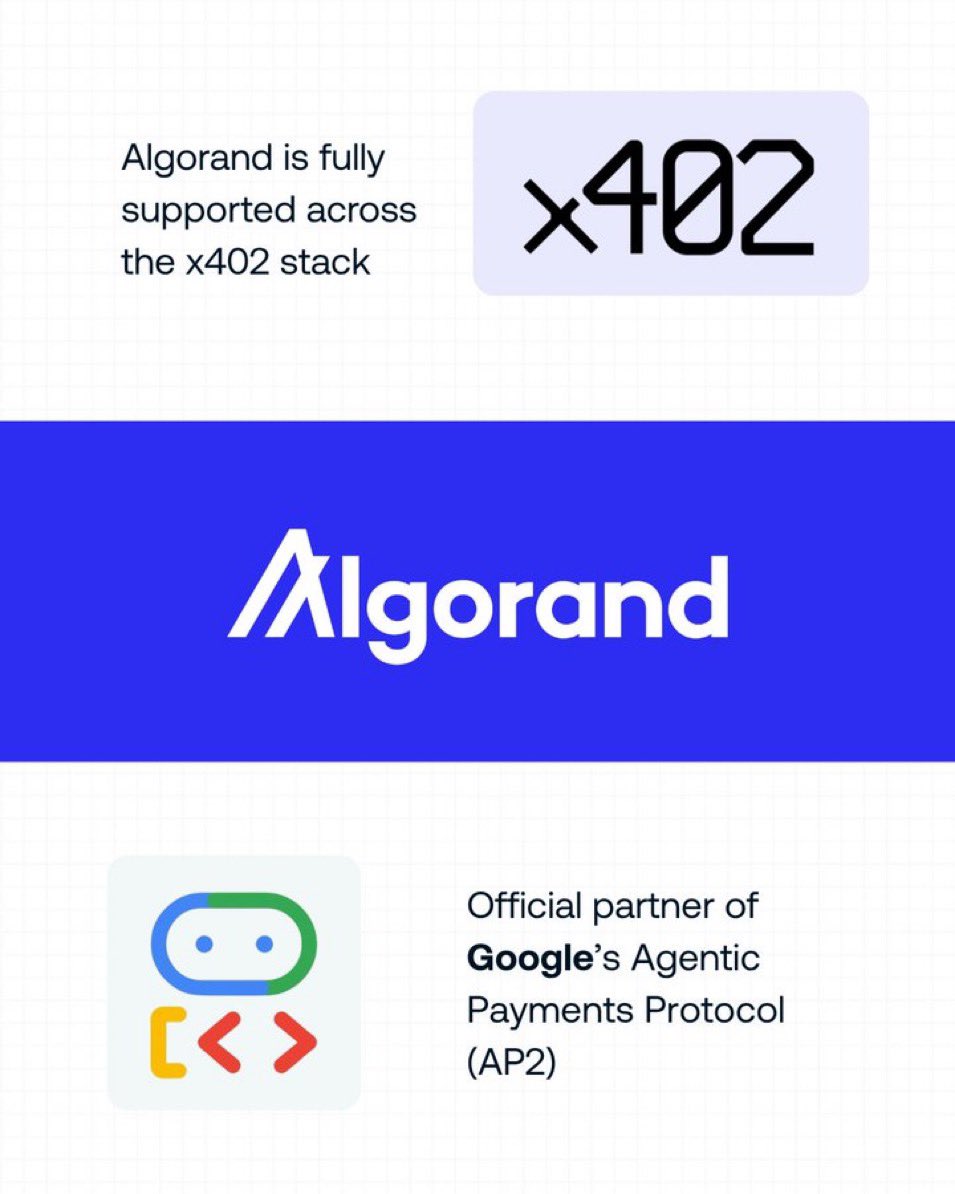
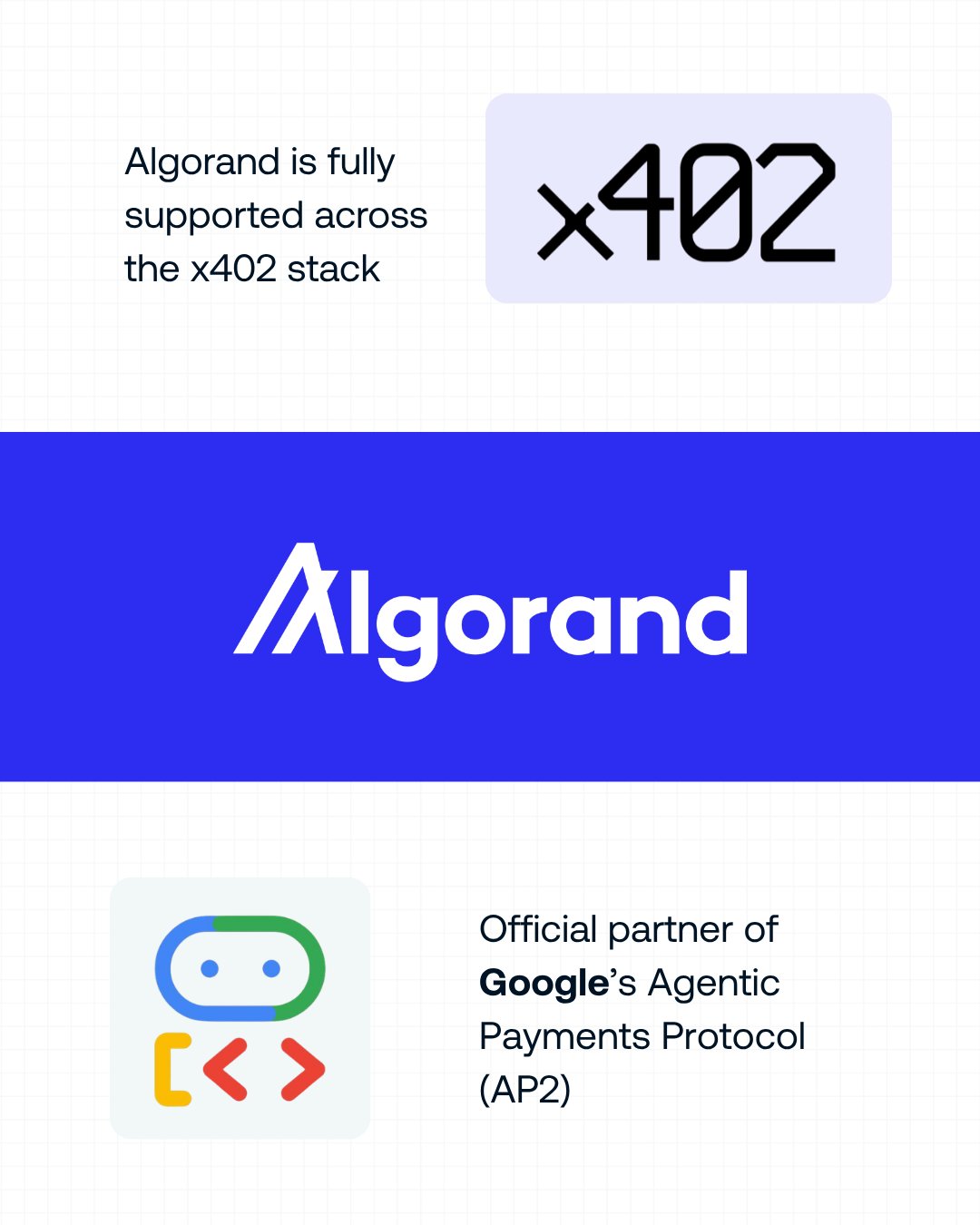
 Algorand is steadily carving out a role in agentic commerce.
• Official partner for @Google’s Agentic Payments Protocol (AP2)
• Full integration across the x402 stack
@Algorand is increasingly well-positioned for AI-native payments. https://t.co/O3q7pqL4Gb
 48
2
2.2K
48
2
2.2K